Former Dominion High School student and DHS Press reporter Varun Shankar now reports from NBA arenas, interviewing some of the world’s best basketball players. As the Washington Wizards beat reporter for The Washington Post, Shankar has built a career that merges sports and writing.
“Growing up, I really liked sports, I really liked writing, and I felt like this was a great way to merge the two,” Shankar said. The spark came early, recalling reading a children’s book series by the late John Feinstein, where middle school reporters covered the World Series, the Super Bowl, and the Olympics. “I read that and I was like “Wow, this is a great job” and it really stood out to me, and I really enjoyed it.”
Shankar’s journey began at DHS Press, where he covered high school games. “I think the biggest change is the type of access that you get. High school teams are happy for any kind of coverage you give them, just because there’s not as much coverage in high school,” Shankar said. As for the NBA, Shankar explained, “You have to do a lot more negotiating when it comes to what kind of access you’re going to get, who you’re talking to, and people are less interested in those kinds of things.”
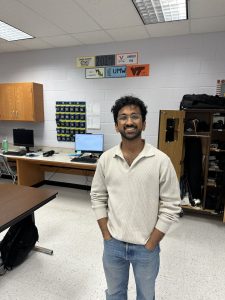
From high school, Shankar took his talents to the University of Maryland, where he studied journalism and economics. “I loved it, Maryland is a fantastic journalism
school,” he said. “It was a great opportunity to get involved with student publications there, learn from some fantastic professors, and of course, Maryland has a lot of journalism alumni there around the world, and that also very much helped me try to relate with people.”
Shankar didn’t stop there; his résumé grew with internships at The Charlotte Observer, The Boston Globe, and The Washington Post. “All of those experiences were great opportunities to learn how various publications operate,” Shankar said. “I got to learn from fantastic journalists and take different things from each place I worked at and put it into my game… and figure out what kind of journalist I want to be.”
He was also part of a partnership where he got to cover the Super Bowl for Sports Business Journal. Shankar got to play video games with Christian McCaffrey while recording video content. “I was not initially supposed to be involved in this, but someone was unable to do it, and so they asked me to do it, and I was like ‘yeah, definitely, ’” Shankar said. At the game itself, he covered media week, press conferences, and wrote stories from the stadium.
Shankar learned from covering high school articles that “You have to approach everything like it is the most important thing,” Shankar said. “To the people playing, it is the most important thing. High school was a great low-risk training ground before I got to more high-profile stuff.”

After his DHS Press career, Shankar wrote an article for The Washington Post on former Titan lacrosse standout Caelan Jones. “It was a very fun experience for me to talk to someone who had been in a similar role to what I had working at DHS Press,” he said. “It was a very interesting moment that I really appreciated.”
Now, his days are fast-paced and unpredictable. On a road game day, he’s up early and at the arena by 10 a.m. for shootaround, where he can get interviews with a coach and a player. He returns around 4pm for the coaches ‘ pre-game speech, and the locker rooms are open, so he can continue to socialize with players, scouts, coaches, executives, and other reporters. During the game, he tracks stats and takes notes, then afterward, he writes a story or creates some kind of video from it.
Shankar also does podcasts for a separate company, Blue Wire Sports pod
casting, where he got approval from the Washington Post to make them once a week. “I think it really adds to my work flow and to my coverage responsibilities and what I offer to readers, listeners, and fans,” Shankar said. “I think that it gives me an opportunity to speak with a little bit more voice than I obviously can in the Washington post sometimes and it’s also a good spot for things that might be too small for articles by themselves, but might be a good little 2 minute podcast segment.”
Even when talking to athletes who are household names, Shankar focuses on connection over intimidation. “You just try to be a person with them,” he said. “They’re multimillionaires and some of the best basketball players on earth, but they’re also just people and a lot of them are close to my age,” Shankar said. “I just talk to them, you know, what cities they like going to, cities they don’t like going to, do they read, do they play video games, do they watch TV, just try to find things that relate to them,” he explained.
This process is very important in Shankar’s job, “it’s nice to make their acquaintance, and it’s also good because when I have to ask them a question, they understand that this is someone I know, this is not a stranger who’s coming and asking me questions,” he said.
Shankar offers advice for aspiring future sports journalists: “Figure out if you really want to do this,” he said. “It’s a very fun job, but it’s also a very difficult job… Approach it as aggressively as possible, but make sure you give yourself backup options,” Shankar said.
As for what’s next, Shankar says he’s focused on the present, but he’s excited about an upcoming feature. “I have a Tre Johnson story coming out within hopefully the next couple of weeks that I’m very excited about,” he explains.
“I really enjoy my job, it is a privilege, it is a pleasure, and I owe a lot of my success to DHS Press,” he said. “I cannot thank Mr. Schwartz and Dominion High School enough for the opportunities they gave.”