When the lights dimmed and the chatter of students faded into silence, few expected the emotions that they would be exposed to. What began as a typical school assembly transformed into a life lesson–not by lecturing, but by laughter, storytelling, and a few rap breaks.
Walking onto the stage, Mr. Peace, Kevin Szawala, immediately drew everyone’s attention by the bright orange shirt he wore and his energy itself. Mr. Peace wasn’t just there to preach about peace, but to implement it. Through his heartfelt words, use of Mahatma Gandhi and Dr. Martin Luther King Jr., and simple but powerful analogies, he did just that.

When the presentation officially began, it was clear that this wouldn’t be a typical anti-bullying presentation. There were no power point slides full of stiff statistics and boring, monotone explanations. Rather, Mr. Peace began to rap, the verses inspired by Gandhi and MLK. Instantly, every student was aware, the surprise palpable as we watched him walk around, fist bumping those closest to him.
Then, when the rap had ended and the background music had faded, he told us stories of the students he met around the country, both old and young, and the experiences they suffered due to their differences compared to their peers. Mr. Peace spoke not only of their bullying, but also of what happened after people opened their hearts and ceased the bullying: friendship, laughter, and love.
Then the dogs came. Mr. Peace had us watch a video on dogs and how they greeted their owners, the time apart being between a few days to a few months. He used their excitement and uncontained energy to illustrate a lesson as simple as it is profound: unconditional love.
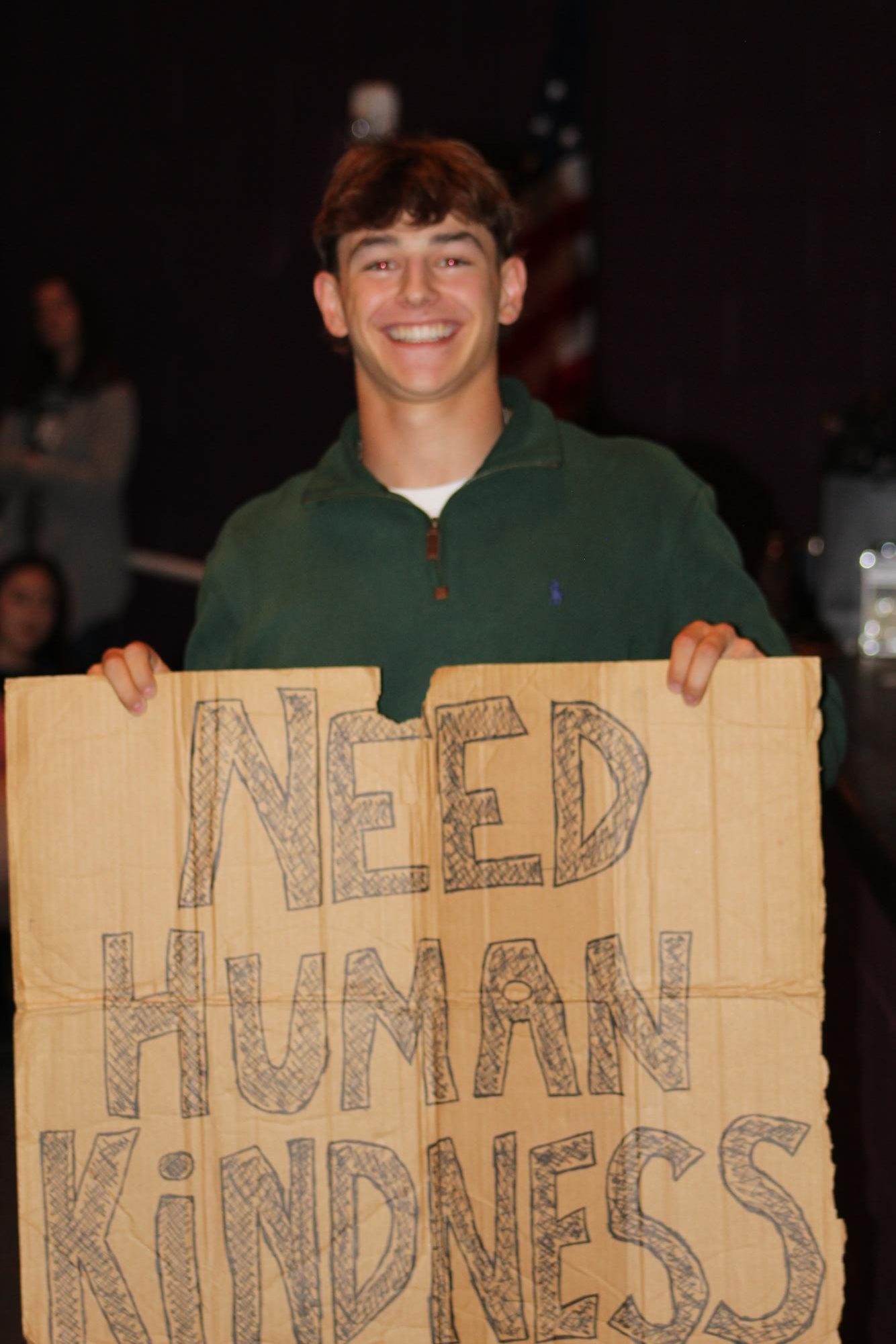
When the video finished, Mr. Peace asked for two volunteers to hold up two props,
a sign that said “In Need of Human Kindness” and a broken mirror in the shape of the peace sign. The props, he explained, were from a friend who taught at a university. This friend had attempted a social experiment, one where he dressed as a homeless person and held up the sign near the path students would take to his class. Out of approximately 40 students, only one stopped and asked if the professor would like their lunch. The professor, who came into the class late, took off his costume in front of the confused students and watched their faces transform into embarrassment. When the professor, deeply disappointed, asked for his students to get out of their seats and come to the front, he held up a mirror in front of their faces–in the shape of a peace sign, the glass broken–and asked them to promise to choose kindness from then on.
Thanking the students and placing the props back onto the stage, Mr. Peace detailed the importance of kindness not just for us individually but as a collective. Just when we had thought the experience was over, the beat dropped, and Mr. Peace began to rap once more. This one, centered on human kindness and the art of love, the message became clear. Peace was not just a word on a poster, but something we create in our choices and actions.
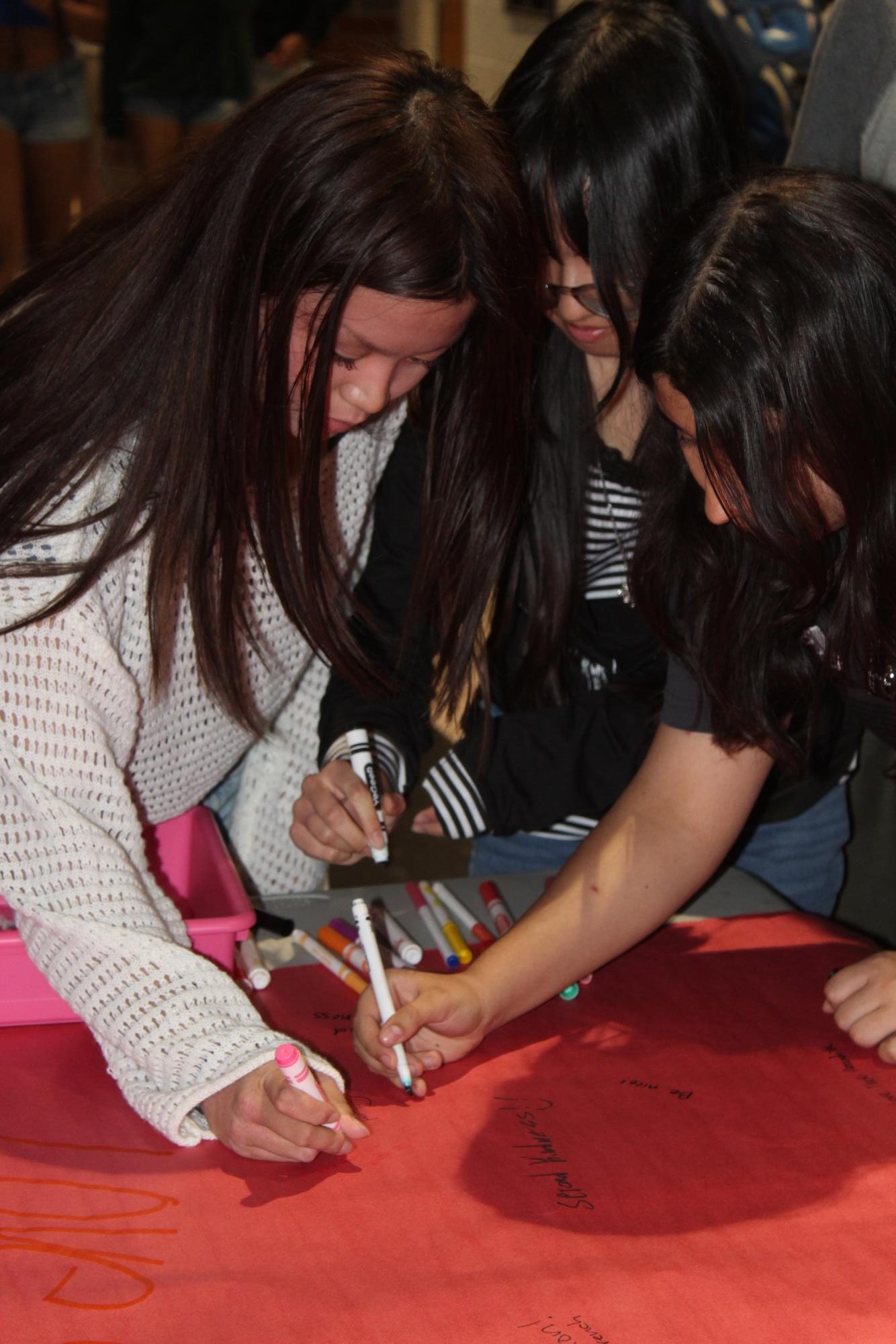
When the rap had ended and students had all left the auditorium, we were greeted by tables full of posters and brightly colored markers. The idea, we were told, was to write the most important message we took from the assembly to create an amalgamation of what we believe to be most important when it comes to inclusion and, most importantly, love.
This wasn’t a lecture about hate, but a celebration of love, inclusion, and the small actions we can take to positively change someone’s life. In a world where differences divide us, Mr. Peace reminded us that our greatest strength was our empathy and, just like dogs, our ability to love unconditionally.